This article compares two places where you can make songs with vocals for free, the Gemini app and Suno’s free plan, as of October 7, 2026. According to their official documentation, both can make songs that run 2 to 3 minutes.
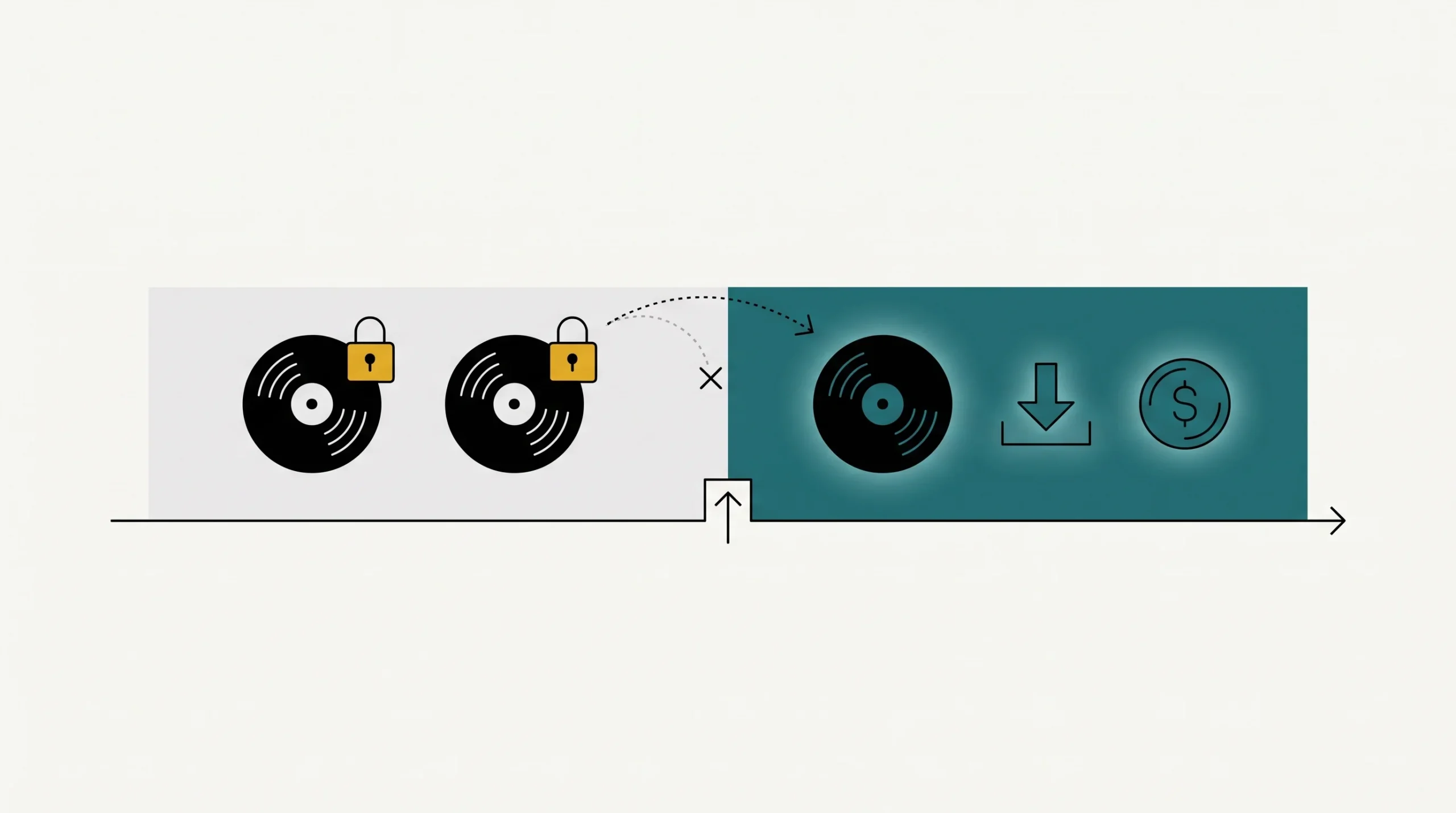
The real difference doesn’t show up when you make a song. It shows up when you try to download it for YouTube or to sell.

Quick summary
- Going by official documentation, the Gemini app (Lyria 3.5) makes songs of about 2–3 minutes (3 minutes max). Suno’s free plan uses its free model, v6-mini, and can make up to 8 minutes in a single generation.
- Songs made on Suno’s free plan belong to Suno and can only be used for non-commercial purposes. Since September 3, downloads have been limited to a set number of trial downloads. Upgrading to a paid plan later doesn’t apply rights to those songs retroactively.
- You can download Gemini songs as MP3 or MP4. However, we found no language that allows or prohibits commercial use in either the Google terms that apply to the Gemini app or its music documentation. It’s also unclear whether free users will still be able to make full songs after the free tier changes on October 9.
Two free AI music makers compared: length, downloads, commercial use
Compared on the same criteria, both can make 2–3 minute songs. The big differences are in downloading and commercial use.
| Criterion | Gemini app (Lyria 3.5) | Suno free plan |
|---|---|---|
| Making songs for free | Yes. Open to all users since September 4 | Yes. 50 credits a day, v6-mini model |
| Song length | Short track about 1 minute, full song about 2–3 minutes (3 minutes max) | v6 models, including v6-mini, go up to 8 minutes per generation. The help center doesn’t mention any differences by plan |
| Vocals | Choose a vocal track or an instrumental | User report (2024) of making songs with English and Korean lyrics |
| Generation limit | Yes, but the numbers aren’t public. From October 9, measured by compute and refilled every 5 hours | 50 credits a day. Credits per song aren’t listed on the pricing page (2024 report: 5 credits per song, about 10 songs a day) |
| Downloads | MP3 (audio) and MP4 (video with cover art) | Limited since September 3. Users who signed up before then get up to 7 over their lifetime. Later sign-ups get them occasionally |
| Song ownership | Google doesn’t claim ownership | Owned by Suno |
| Commercial use | No language allowing or prohibiting it found in the applicable terms or music documentation | Not allowed (personal, non-commercial use only) |
| Upgrading to paid | Limits rise to 2x (Google AI Plus) or 4x (AI Pro). Under the new lineup, only AI Pro and Ultra can select the ‘Pro’ model. No mention of any difference in rights | Rights don’t apply retroactively to songs made for free |
Suno’s pricing page doesn’t say how many credits one song costs on the free plan. The ‘about 10 songs a day’ figure in the table comes from a 2024 user report, so the number may differ with the current free model (v6-mini).
Making AI songs with Gemini: free 3-minute tracks, MP3s included
On September 4, Google added its music model Lyria 3.5 to the Gemini app and opened it to every user on the web and mobile apps worldwide. You can pick a genre from a list or describe what you want. You choose between a vocal track and an instrumental, and you can also start from one of the new templates.
You get two length options. According to the music generation help page, a short track runs about 1 minute and a full song about 2–3 minutes. The official overview page lists 3 minutes as the maximum.
You can download a finished song as a video with cover art (MP4) or as an audio file (MP3), and you can also create a share link. Every track carries SynthID, Google’s AI watermark.
To use the feature, you need to meet three requirements.
- Age 18 or older
- A personal Google account or a supported work or school account
- Keep Activity turned on
Free doesn’t mean unlimited, and you’ll see a notice once you hit the limit. The feature table by plan lists music generation for free users (no AI plan) too, but Google hasn’t said how many songs that covers. Paid subscribers get 2x (Google AI Plus) or 4x (Google AI Pro) the base limit.
A test by the third-party outlet GenMediaLab on September 6 gives a glimpse of what a free account actually produces. Full songs made on a free account ran 2:43 and 2:49, and a short track ran 1:02.
GenMediaLab reported that no limit notice appeared during four generations in one sitting. That was only one account, though, so the result isn’t an official limit, and the test came before the free tier changes on October 9.
From 30 seconds to 3 minutes, from paid to free
- February 18: Lyria 3 introduced 30-second track generation. Supported languages were English, German, Spanish, French, Hindi, Japanese, Korean, and Portuguese.
- March 25: Lyria 3 Pro opened longer song generation, starting with paid subscribers.
- September 4: With the launch of Lyria 3.5, all users could make 2–3 minute songs.
In other words, free users have had 3-minute songs with vocals for only a little over a month.
What about lyrics in other languages, like Korean? According to the developer API documentation, Lyria 3.5 writes lyrics in the same language as the prompt and adjusts vocal style and pronunciation to match. The official materials don’t say how natural Korean lyrics sound in the app, though.
The same documentation also explains the safety filters. Prompts that ask for a specific singer’s voice or for existing copyrighted lyrics are blocked.
Gemini’s free tier changes on October 9: will 3-minute songs survive?
Starting October 9, these Gemini app terms change for personal accounts without an AI subscription.
- Models: Flash-Lite only. Flash and Pro won’t be available.
- Usage limits: these will be measured by compute and refill every 5 hours.
- Weekly cap: once you hit it, you can’t keep using the app.
Paid plans get different models too. Google AI Plus gets Flash-Lite and Flash, AI Pro adds the Pro model, and AI Ultra adds Deep Think on top of that. Google says AI Plus subscribers will get a separate email saying when the change applies to them.
Google listed image, video, and music generation among the features that use a lot of resources. It doesn’t say anything about blocking music generation for free users, though.
One line on the music generation help page is a concern. It tells you to ‘switch the model to Pro to create a full song,’ but under the new lineup, only AI Pro and Ultra subscribers can select the Pro model.
These names are easy to mix up. Google AI Pro is the name of a plan, while Pro is the name of a model. The official sources alone don’t tell you whether the ‘Pro’ on the help page is outdated wording from the Lyria 3 Pro era or means the Pro option in the chat model menu.
So we can’t yet say whether free users will keep making 2–3 minute songs after October 9. The same question applies to AI Plus subscribers, who are losing access to the Pro model.
If you really need full songs made for free, make them before October 9 and download them as MP3s to be safe.
Suno’s free plan: you can make songs, but downloads and monetization are blocked
According to Suno’s pricing page, the free plan comes with 50 credits a day and the free model v6-mini, and songs are generated in a shared queue. The free plan listing also says ‘no commercial rights’ and ‘no monthly downloads.’
According to Suno’s help center, v6, v6-wild, and v6-mini can all generate up to 8 minutes at a time. v6-mini is available on every plan, and the help center doesn’t list any length differences by plan.
Making a song works on the free plan. In May 2024, a user on the Korean-language MileMoa forum wrote that they made a free-plan song with a first verse, second verse, and chorus. It had English and Korean lyrics and even album art.
The user said each song cost 5 credits, so they could make about 10 a day, but those numbers reflect the 2024 model. In the comments, people asked whether the song could be used commercially.
Suno owns the songs, and you can’t use them commercially
Songs made on the free (Basic) plan are owned by Suno. Users can only use them for non-commercial purposes, as long as they follow the terms.
Songs made while you subscribe to Pro or Premier are a different story. You own them, and you keep the commercial rights to those songs even after the subscription ends. What decides the rights is the plan you were on when you made the song.
Distribution to Spotify and Apple Music, along with monetization on YouTube and TikTok, is also limited to Pro and Premier subscribers. You can’t make money from free songs.
Free downloads have been limited since September 3
On September 3, Suno introduced download limits.
- Signed up before September 3: up to 7 trial downloads, lifetime
- Signed up after September 3: an occasional trial download
- Songs from trial downloads: no commercial use
- Download count: extra downloads can be bought separately. Pro gets 20 a month and Premier gets 60 a month
The limits apply equally to songs made before September 3. Listening and sharing within Suno aren’t restricted. Suno said the change is meant to make it harder for bad actors to pull songs off the platform in bulk.
Suno’s terms of service also changed that day. Free users can only use outputs for lawful personal, non-commercial purposes. Commercial use is allowed only for songs downloaded through approved channels within the plan’s download quota. In other words, paid users can’t use a song commercially unless they’ve downloaded it.
Upgrading doesn’t retroactively cover older songs
Songs made for free don’t come with a commercial license by default, even if you subscribe to Pro or Premier later. Suno says it may grant retroactive rights ‘in certain cases’ but doesn’t guarantee them.
Say you like a song you made for free, so you sign up for Pro ($8 a month). That song is still non-commercial only. To make money, you’d need to make a new song while subscribed and download it within your download limit.
One help page still says ‘paid plans start at $10 a month,’ which doesn’t match the $8 a month for Pro on the pricing page. Check the amount on the checkout screen before you pay.
Monetizing and selling AI songs on YouTube: catches beyond the terms of service
Suno’s terms rule out monetizing or selling free songs, and the official Gemini documents we checked don’t spell out any commercial-use conditions. Some problems can also come from outside a tool’s terms.
‘Da Haejwotjanha’: why 7 million views still looked hard to monetize
In July 2024, ‘Da Haejwotjanha’ (roughly, ‘I Did It All for You’), a parody song made with Suno and credited to the virtual singer ‘Shin Chang-seop,’ passed 7 million views within a month. It also got 3,500 karaoke requests.
The writer of the Haedalle newsletter analyzed the song and concluded that it would be hard to make money from. The writer pointed to two hurdles: MapleStory’s copyright and the publicity rights of director Kim Chang-seop, a real person.
The newsletter doesn’t say which Suno plan the creator used or whether they actually made money. Still, the analysis suggests that having commercial rights from the tool may not be enough when someone else’s work or a real person is involved.
AI music channels: terms violations and policy-change risk
In October 2025, the Korean outlet Second Salary covered YouTube AI music channels that upload songs made with Suno. It estimated revenue ranges, such as about ₩280,000 for 100,000 monthly views. It named two risks: earning money from free-plan music violates the terms, and platforms’ AI music monetization policies could change.
That article came out before Suno added download limits. Free users now hit restrictions as soon as they try to save a song as a file, before monetization even comes up.
YouTube’s monetization limits on mass-produced AI content
Tubefilter reported that in July 2026, YouTube clarified how it explains its ‘inauthentic content’ monetization policy. AI-generated content that looks mass-produced from generic or unoriginal templates can’t be monetized. YouTube added that the rules themselves haven’t changed.
The report didn’t mention AI music specifically, but this standard applies no matter which tool made the content. Even if you have commercial rights to your songs, a channel that uploads many similar songs could still have problems in YouTube’s review.
How far can you use Gemini songs?
Google’s Terms of Service (effective July 30, 2026) say Google doesn’t claim ownership of AI content you generate. However, they prohibit presenting AI-generated content as human-made to deceive others. They also prohibit using generated content to develop machine learning models.
The Gemini Apps Privacy Notice lists which terms apply to the Gemini app. They include Google’s Terms of Service and the Generative AI Prohibited Use Policy, and consumers in Korea are also covered by the Korean Location Terms of Service.
The Generative AI Prohibited Use Policy forbids three things: infringing others’ intellectual property, impersonating real people to deceive without disclosure, and misrepresenting content as made by a human alone.
We checked those two sets of terms, the overview page, the music generation help page, and the Lyria 3, 3 Pro, and 3.5 announcements. None of them had language allowing or prohibiting commercial use. The Lyria 3 Pro announcement only says to follow the Terms of Service and not infringe intellectual property.
The old Generative AI Additional Terms of Service stopped applying to general users on May 22, 2024, when AI-related provisions were added to the Terms of Service.
One blog claims that ‘paid subscribers can use it commercially.’ It cites ‘Gemini App Additional Terms’ as the source but doesn’t quote or link them. No document by that name appears in Google’s list of terms that apply to the Gemini app either.
GenMediaLab also noted that Google hasn’t published commercial-use terms for Lyria 3.5 output. In short, Google doesn’t claim ownership of Gemini songs, but the official documents we checked don’t say whether commercial use is allowed.
We also found no clearly sourced public cases of free Suno songs being distributed and then taken down. The same goes for Gemini songs passing or failing a monetization review.
Commercial use of AI music: what each plan allows for your goal
Here’s how it breaks down by what you want to do.
| What you want to do | Gemini free | Suno free |
|---|---|---|
| Make, listen, and share | Yes. Share links available | Yes. No limits on listening and sharing within Suno |
| Download a file to use in personal videos | Downloadable as MP3 or MP4 | Trial downloads only (up to 7 for earlier sign-ups, occasional for later ones), non-commercial use |
| YouTube monetization, music distribution, sales | No language allowing or prohibiting it found. The Prohibited Use Policy, including its bans on IP infringement and impersonation, still applies | Not allowed. Only songs made during a Pro or Premier subscription and downloaded within the quota qualify |
| Make for free, then upgrade and use | Limits go up, and AI Pro and above can select the ‘Pro’ model. No mention of any difference in rights | Rights aren’t retroactive. Exceptions aren’t guaranteed |
Whichever tool you use, the AI-generated song itself may not be protected by copyright. Suno explains that US copyright law only protects works made by humans, and it says lyrics you write yourself belong to you. Because laws differ by country, Suno also suggests checking with your country’s copyright office.
Two questions are still open. Will free accounts still be able to make full Gemini songs after October 9? And will Google spell out commercial-use terms for Gemini music?
Until those are answered, if monetization is your goal, the safer pick is the tool whose rights are clearly spelled out in writing.