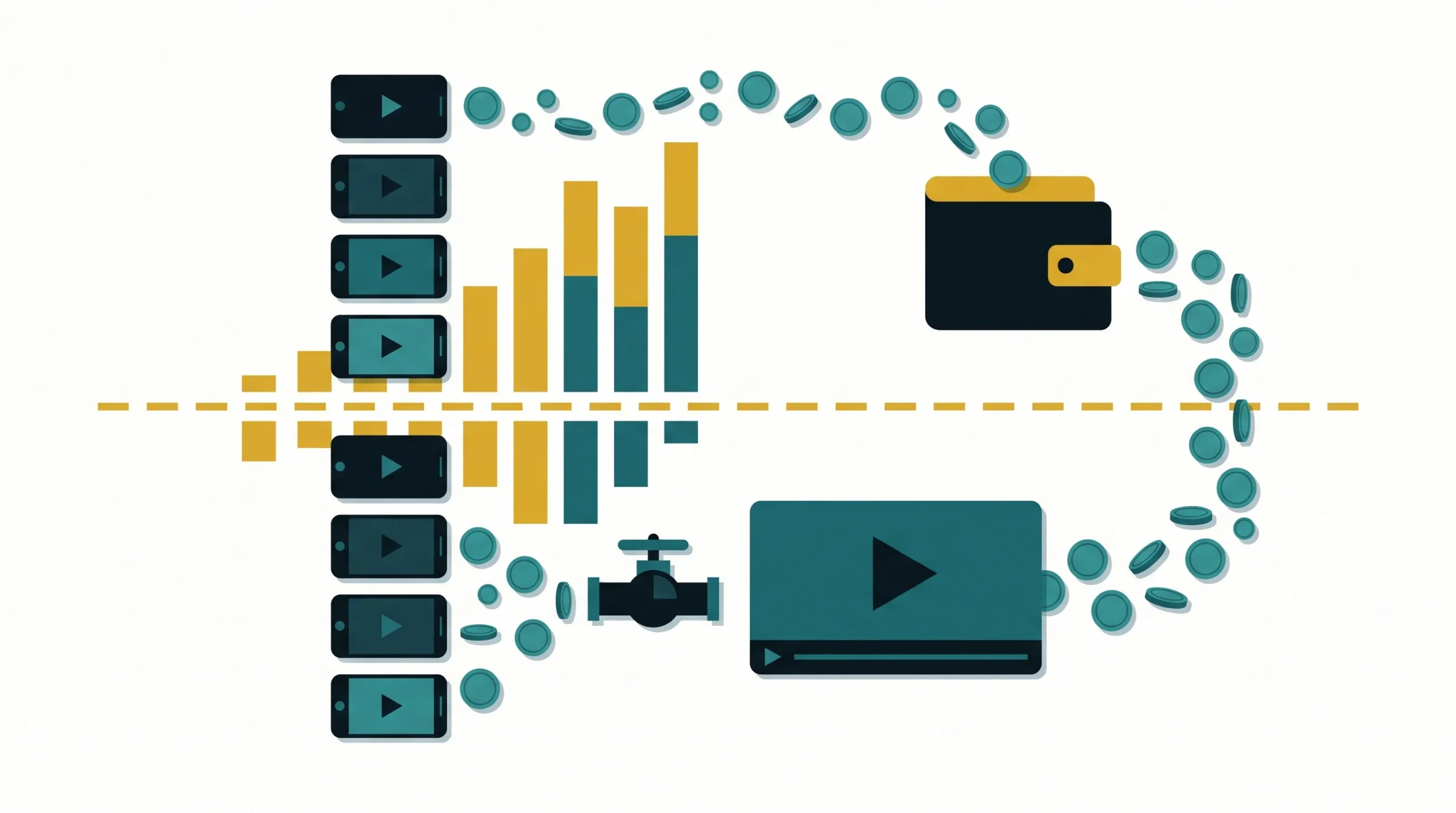
If you start a side hustle making Shorts with AI, whether you’ll get any Shorts ad revenue now depends heavily on a view threshold. Starting February 1, 2027, YouTube will share Shorts ad and Premium revenue only with channels that have at least 10 million "qualified" Shorts views in the last 90 days. This applies to channels already in the YouTube Partner Program (YPP) too.
Falling short doesn’t get you removed from YPP. Long-form revenue and fan funding and Shopping revenue stay the same, and once you pass 10 million again, Shorts revenue comes back automatically. But if your side-hustle math depends only on Shorts ad revenue, it stops working unless your channel clears this number consistently.
In short
- From February 1, 2027, new YPP applicants will need 1,000 subscribers plus either 8,000 qualified watch hours in 365 days or 20 million qualified Shorts views in 90 days. That’s double today’s bar.
- From February 1, 2027, channels already in YPP will also need 10 million qualified Shorts views in 90 days to get that month’s Shorts ad and Premium revenue. Eligibility is checked every month. Long-form revenue stays the same.
- For channels below 10 million, the remaining revenue sources are long-form videos and the fan funding and Shopping features available from 500 subscribers. AI videos that look stamped out of a template can’t be monetized, no matter how many views they get.
What changes in YouTube’s 2027 monetization requirements
YouTube announced a Partner Program overhaul in an official blog post on August 10, 2026. It’s the first major change since 2018. The new terms and Shorts revenue sharing rules take effect on February 1, 2027. In Korea, Newsis (August 11) and The Korea Economic Daily (August 12) reported on it.
Here’s what’s changing next to the current rules, based on YouTube Help Center guidance as of October 16, 2026.
| Item | Now | From February 1, 2027 |
|---|---|---|
| New YPP applications | 1,000 subscribers + 4,000 watch hours or 10 million Shorts views in 90 days | 1,000 subscribers + 8,000 qualified watch hours in 365 days or 20 million qualified Shorts views in 90 days |
| Shorts ad and Premium revenue | Shared with every channel in YPP | Shared only with channels that have 10 million+ qualified Shorts views in the last 90 days (checked monthly) |
| YPP status of existing members | Kept | Kept (the higher entry bar doesn’t apply) |
| Long-form ad revenue | Earned by YPP channels | Kept even below the Shorts threshold |
| Fan funding, Shopping, creator partnerships (early tier) | 500 subscribers + 3 public uploads in 90 days + 3,000 qualified watch hours in 1 year or 3 million qualified Shorts views in 90 days | No change |
Beginning February 1, 2027, creators who have 10 million qualified Shorts views over the last 90 days will be eligible for ads and subscription revenue sharing on Shorts.
YouTube Official Blog, August 10, 2026
The announcement also says, "This update won’t impact creators already in YPP." That line comes right after the one about raising YPP entry requirements for new creators, so it refers to the higher entry bar.
The Help Center guidance also says only that existing members’ "status" won’t change. Existing members still have to meet the Shorts revenue sharing threshold.
Existing members can lose Shorts revenue too, and it’s checked every month
Eligibility is decided month by month. Under the Shorts monetization policy, YouTube checks whether a channel crossed 10 million qualified Shorts views in the 90 days ending on the 15th of the previous month. Based on that, it decides whether to pay Shorts revenue for the month. Clearing the bar once doesn’t mean you keep getting paid.
In a month when you miss the threshold, your channel still stays in YPP. You keep earning from long-form videos, and once you’re back above 10 million, Shorts revenue sharing restarts automatically.
Displayed views and "qualified" views aren’t the same
The threshold counts "qualified" views. Cartoon Brew reported that YouTube leaves out views it considers ineligible, so the number may not match public view counts.
That means a channel showing just over 10 million views could still fall short when YouTube runs the actual check. The Cartoon Brew article doesn’t say exactly which views are excluded.
Two things existing members should do before February
- Accept the terms (by January 31, 2027): Review and accept the updated terms in YouTube Studio. If you don’t, you can’t earn from the related features starting February 1, but you won’t be removed from YPP.
- Activity requirements: From February, a channel counts as "active" only if it meets one of these: 1,000 qualified watch hours in 365 days, 1 million qualified Shorts views in 90 days, or 2 long-form videos or 5 Shorts uploaded every 90 days. If you miss them, you get a 90-day grace period.
Shorts revenue per 1,000 views: what are 10 million views worth?
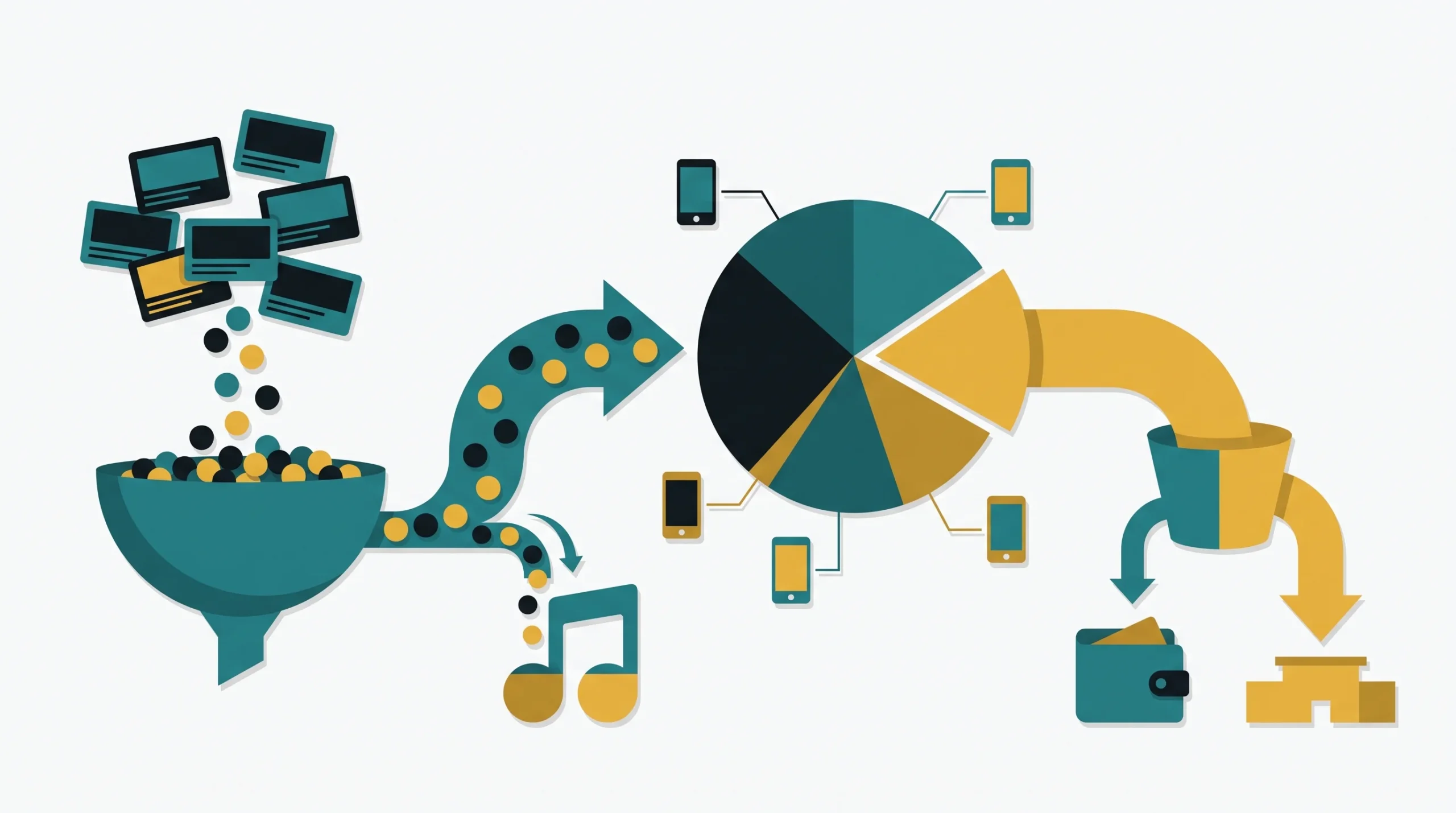
Shorts revenue doesn’t come from ads attached to each video. Each month, YouTube pools Shorts feed ad revenue and subtracts music costs to form a Creator Pool. It then divides the pool by each creator’s share of engaged views in each country. Creators keep 45% of what’s allocated to them.
Here’s how the official example works. In a country with 100 million views and $100,000 in ad revenue, suppose the pool is $90,000. A creator with 1 million views is allocated 1%, or $900, and keeps 45% of that: $405. YouTube made up these numbers to explain the system, so they aren’t real rates.
YouTube doesn’t publish actual Shorts rates for Korea. Sisa Journal (February 2025) and Yeoseong Gyeongje Sinmun (June 2025) wrote that Korean Shorts reportedly pay about $0.10 per 1,000 views. Using that figure, Sisa Journal calculated that 10 million views a month comes to about 1.4 million won.
Applying that reported rate to the new threshold helps put 10 million views in perspective. 10 million views in 90 days works out to about 110,000 qualified views a day on average, or about 3.33 million a month. At $0.10 per 1,000 views, that’s roughly $333 a month.
This is a rough estimate based on an unofficial rate. Still, it shows what’s at stake: if a channel sitting right at the line misses the threshold once, that whole month’s Shorts revenue stops.
What happens to channels near the line
Cartoon Brew (August 17, 2026) cited Reddit r/PartneredYoutube user Shaine_Memes, who said they earned about $2,600 from 9 million qualified views. The article doesn’t give the time period or country, so the figure can’t be compared directly with Korean rates.
They post three Shorts and one long-form video a week and are among the top two channels by views in their niche. Even so, they said they only barely crossed 10 million in their best 90-day stretch. They worried that one bad month with the algorithm could cost them close to $1,000 in monthly income.
In the same article, animator Jeff Bruno (Glorp the Comedy Monster) said the higher entry bar wasn’t the main problem. What worried him more was the move from "get in once and keep earning" to a monthly check. He also said Shorts-focused YouTubers are talking about switching to long-form.
In Korea, Newsis predicted that small and mid-sized Shorts creators below the threshold will have a harder time earning ad and subscription revenue. In the same article, YouTube said channels already making substantial Shorts revenue wouldn’t be hit hard.
AI Shorts side hustle results from people who tried it
We collected results published by reporters and individuals who made Shorts with AI. Most cases used AI, but it’s unclear whether the Weolbu community poster did. All of these results are from before the 2027 change, and nobody disclosed their costs.
| Who (when published) | Tools | Time taken | Cost | Result |
|---|---|---|---|---|
| Sisa Journal reporter Jeong Yun-seong (February 2025) | ChatGPT (topic), VREW (script, AI voice, automatic image matching) | Under 10 minutes (about 5 minutes per the subheading) | Not disclosed | Made one 43-second Short. Said it was simpler and rougher than human-made Shorts but looked convincing after a few edits. Didn’t share uploads, views, or revenue |
| Dailian reporter Lee So-young (June 2026) | ChatGPT (topic suggestions), unnamed AI voice, image, and video tools | About 2 hours (3 hours per the subheading) | Not disclosed | Uploaded one 20-second Short about lovebugs. The script read like a dry explainer, and the AI voice’s tone and pacing were awkward. 4 views; revenue not mentioned |
| Anonymous Blind poster (November 2025) | AI-generated lines and images (tools not named) | 20–30 minutes per video when pieced together without polishing | Not disclosed | Ran it for about 6 months. Unpolished videos didn’t get views. After settling on a channel concept, revenue reached "pocket money" level. Said it took more mental energy than their day job. Some commenters said they tried it and quit because it didn’t pay |
| Weolbu community user ‘Seller Salon Jaemi’ (October 2025) | Unclear whether AI was used (tools not disclosed) | Not disclosed | Not disclosed | About 90,000 won in view revenue from a Shorts channel with 548,000 views; videos with around 1,000 views earned 100 won. Claims over 3 million won in sales of products promoted through Shorts |
| Buing Insights (July 2026) | GPT (script), Typecast (voice and captions), CapCut (editing), AI image generation or collected images, Coupang Partners | Two days of focused production | Not disclosed | Posted about 50 shopping affiliate Shorts to YouTube Shorts and Instagram. First earnings came 3–4 days after the Instagram uploads: 1,720 won earned on a combined total of 57,290 won. Took everything down about a week later |
| YouTube channel ‘Tamgwang’ (Lilys summary note, no year given) | Paid GPT, Douyin, Google Image Search, a TTS site, CapCut, Coupang Partners, Inpock Link | About a month | Not disclosed | The speaker claims total revenue of "nearly 10 million won," including about 3 million won from a channel with zero subscribers and 7 million won in shopping affiliate revenue from an existing channel. Shorts ad revenue isn’t broken out. Unverified figures |
Looking only at Shorts view revenue, the numbers are small. The Sisa Journal reporter made a video in under 10 minutes but didn’t share how it did after uploading. The Dailian reporter spent about two hours revising a video, and it got just 4 views. The one Korean case that gave a number for Shorts view revenue (AI use unclear) was the Weolbu poster, who made about 90,000 won from 548,000 views.
One case reported far bigger numbers. YouTube channel ‘Tamgwang’ claimed total revenue close to 10 million won, but that includes 7 million won in shopping affiliate revenue from an existing channel, and Shorts ad revenue isn’t listed separately. These figures are the speaker’s claim and haven’t been verified.
In these cases, the people who reported earning more depended on shopping affiliates or product sales, not ads. The Weolbu poster also emphasized sales of products promoted through Shorts more than view revenue.
On the other hand, Buing Insights posted about 50 shopping Shorts and earned only 1,720 won. The team decided the videos weren’t built for repeat purchases. They lacked a strong hook in the first 3 seconds and showed too little of the products in use. Nothing pointed viewers to a next step. They took all the videos down about a week later.
If the AI voice’s delivery bothers you, as it did the Dailian reporter, our post Making an AI voice: can you clone your own voice for free? can help you pick a tool. It covers free plans and voice cloning terms for narration tools.
Mass-produced AI content gets demonetized before the threshold matters
There’s another rule you can run into before the view threshold matters. On July 15, 2025, YouTube renamed its "repetitious content" policy to "inauthentic content." Content that falls under this policy can’t be monetized.
The channel monetization policies list mass-produced-looking AI-generated content made from common or unoriginal templates as an example of what’s excluded. Their acceptable examples include videos that share the same intro and outro but have different main content, and character series. Following those examples still doesn’t guarantee monetization.
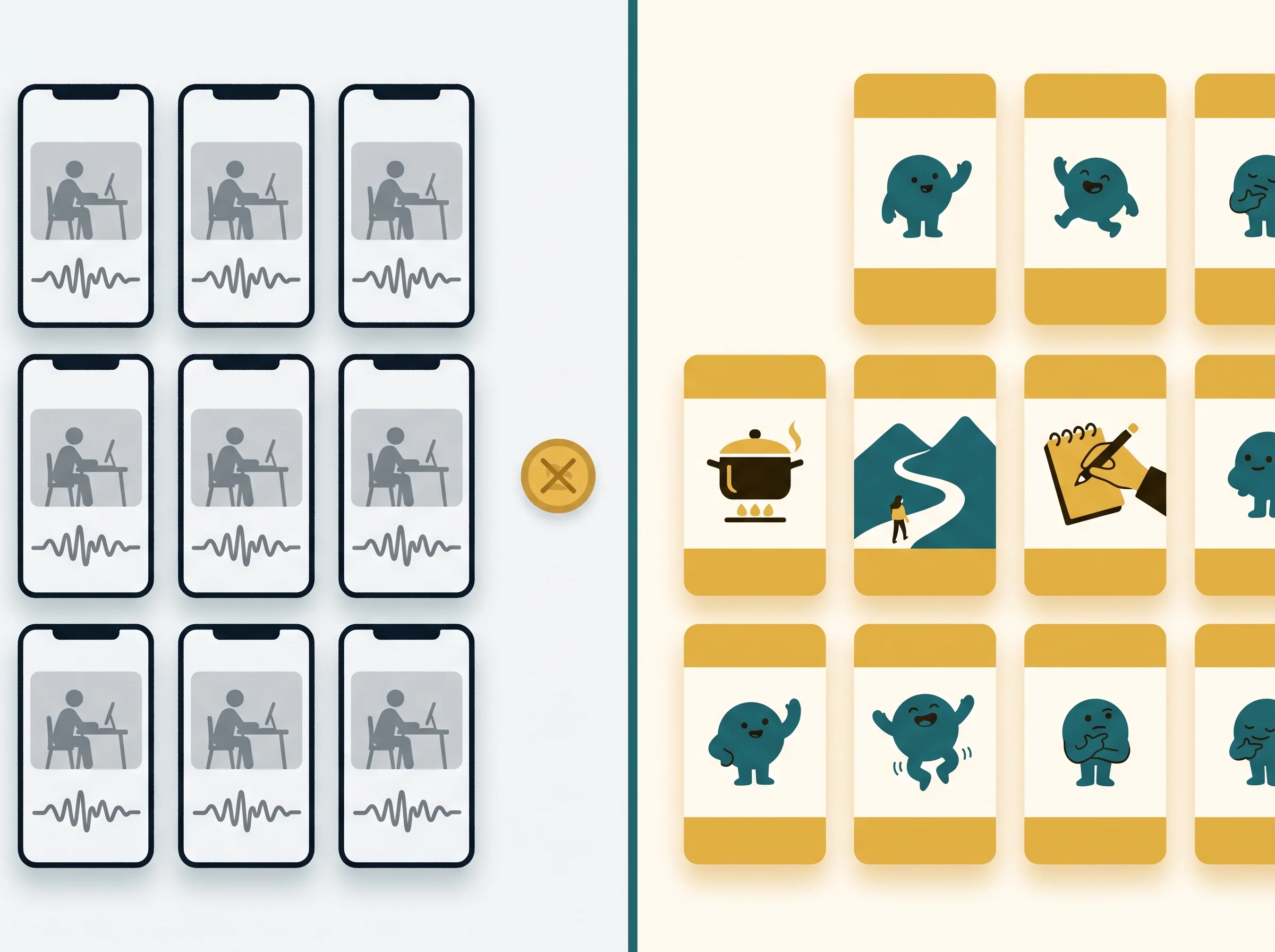
Maeil Business Newspaper (January 19, 2026) reported a growing number of users who said their channels were demonetized after mass-producing Shorts with AI. The article said the main reasons for these penalties weren’t the use of AI itself. They were repeated similar images, voices, and structure, and reuploading existing content with only minor edits. It didn’t give the number of affected channels or any individual figures.
If your side hustle relies on automation that churns out videos from templates, you may run into this rule long before you get near 10 million views. YouTube checks separately whether you’ve cleared the view threshold and whether your videos can earn revenue at all.
Revenue left if you start now: long-form and Shopping
If you start now and join under the current requirements (1,000 subscribers + 4,000 hours or 10 million Shorts views in 90 days) before February 1, 2027, you’ll avoid the 20 million entry bar. To earn Shorts revenue from February on, though, you’ll still need to keep clearing 10 million views in 90 days, just like existing members. Joining early only gets you past the entry bar.
After February, what you can earn depends on where your channel stands.
| Channel situation (from February 2027) | Revenue you can earn | Revenue you can’t earn |
|---|---|---|
| In YPP, 10 million+ qualified Shorts views in 90 days | Shorts ad and Premium revenue sharing, long-form ads, fan funding and Shopping | None |
| In YPP, under 10 million qualified Shorts views in 90 days | Long-form ads, fan funding and Shopping | Shorts ad and Premium revenue sharing (resumes automatically once you’re back above the threshold) |
| Joined YPP’s early tier (500 subscribers + 3 public uploads in 90 days + 3,000 qualified watch hours in 1 year or 3 million qualified Shorts views in 90 days), not yet in the ad revenue tier | Fan funding, Shopping, creator partnerships | Ad revenue (available after joining the 1,000-subscriber tier) |
| Judged to be mass-produced (inauthentic) content | — | Excluded from monetization at every tier |
YouTube said it will introduce Shopping bonuses, brand collaboration incentives, and revenue boosts for channels that start or grow trends, all for channels below 10 million. As of October 16, 2026, it hasn’t announced eligibility, amounts, or a timeline.
The YouTube Shopping affiliate program covers the "Shopping" revenue in the table and is available in Korea. Per the Help Center as of October 16, 2026, it’s open to YPP channels that meet the YPP subscriber requirement. Music channels and channels set as made for kids aren’t eligible.
Each participating brand or retailer sets its own commission rate for each product. The Korea Economic Daily (March 17, 2026) named Coupang, Kurly, Ohouse, and CJ OnStyle as Korean partners and reported that AliExpress had just joined.
Coupang Partners, which some of the Korean side hustlers used, pays external affiliate commissions. It isn’t part of YouTube’s revenue sharing (YPP).
Yeoseong Gyeongje Sinmun (June 2025) reported that AI Shorts side-hustle courses advertise with lines like "3 million won a month guaranteed" and "100,000 won a day from a single video." Course fees ranged from around 10,000 won to several million won.
The Fastcampus AI Shorts package page (sale price from 216,000 won as of October 16, 2026) shows view-count examples. It doesn’t cover YPP requirements, the 2027 changes, or the mass-produced content policy. It also doesn’t promise any revenue.
Unless your channel consistently clears 10 million views in 90 days, it’s hard to make a side hustle work on Shorts ad revenue alone. Smaller channels still have long-form and the fan funding and Shopping features available from 500 subscribers, but those don’t guarantee income either. Template-churned AI videos may not earn on any of these paths.