Yes, you can make your own voice, or any voice you like, with AI. But “designing” a new voice from a written description and “cloning” a real person’s voice from a recording are very different when it comes to what’s free and what conditions apply.
Here’s how ElevenLabs’ Eleven v4 and Google’s Gemini 3.8 TTS, both released in late September, compare. If you’re making a narration voice for videos, this covers what you can do where, which recordings and consent you’ll need, and what it costs.
The short version
- Designing a voice by describing it in text is free to start on both the ElevenLabs free plan and the Gemini API free tier.
- Eleven v4’s 10-second cloning starts with the Starter plan, listed at $6 a month, so the free plan can’t do it.
- Gemini 3.8 TTS cloning has no separate charge on the free-tier pricing. In exchange, along with a 10–30 second recording, you have to submit a recording of the voice’s owner reading a consent sentence.
AI voice design vs. voice cloning: what’s the difference?
Voice design creates a new voice from a written description, with no recording of a real person. You type a request like “a calm documentary narrator with a low voice.”
Voice cloning takes a recording of a real person and makes that voice read other text. Technically, you could feed in someone else’s voice just as easily, which is why both companies attach consent requirements to cloning.
So if all you need is a pleasant narration voice, design is enough. Cloning’s recording, pricing and consent requirements only matter when it really has to be your voice.

Eleven v4 vs. Gemini 3.8 TTS: what you get for free
| Feature | Eleven v4 (ElevenLabs) | Gemini 3.8 Flash TTS (Google) |
|---|---|---|
| Announced | September 28, 2026 | September 23, 2026 (U.S. time) |
| Voice design | Voice Design included in the free plan’s feature list | In AI Studio or the API, available on the free tier |
| Recording needed to clone | From 10 seconds (1–5 minutes recommended) | 10–30 seconds of reference audio + a consent sentence recording |
| Cloning price | From Starter ($6/month); not on the free plan | No separate price listed; free-tier input and output are free |
| Consent check | User confirms they have the rights and consent (per the IVC docs) | System checks that the consent recording and the reference audio are the same person |
| Conditions for free use | 10,000 credits/month (about 10 minutes), personal use, no commercial license | Free-tier content is used to improve Google products and may be reviewed by humans; no usage limit figures in the docs |
| Languages | 90+ | 100+ (130+ per the API docs) |
| Where to use it | ElevenCreative, ElevenAgents, API | Google AI Studio, Gemini API |
The biggest split is in cloning. ElevenLabs gets by with a short recording but costs money. Gemini can be started for free going by its pricing page, but it adds one more step: the consent recording.
Eleven v4: no voice cloning on the ElevenLabs free plan
When ElevenLabs launched Eleven v4 and v4 Turbo on September 28, it announced that a high-fidelity Instant Voice Clone can be made from just 10 seconds of audio. Both models support 90+ languages and are available right away in ElevenCreative, ElevenAgents and the API.
The company says v4 ranks first on the Artificial Analysis leaderboard and that about 75% of listeners chose v4 in blind comparisons. Both figures come from the company itself.
What the free plan covers
v4 costs the same in credits as the other TTS models, so it’s available on every plan. The free plan lets you sign up without a card and generate 10,000 credits a month, roughly 10 minutes of audio, for personal use only.
The free plan’s feature list on the pricing page includes Text to Speech and Voice Design. Generating v4 narration with the default voices, or designing a new voice, won’t cost you anything.
10-second cloning and commercial use start at Starter
Instant Voice Cloning first shows up in the feature list on the Starter plan ($6/month). The pricing page lists a first-month price of $1 (83% off), and this is also the plan where a commercial license comes in.
Professional Voice Cloning, built from 30 minutes or more of recordings, starts at the Creator plan ($22/month), listed with a first-month price of $11 (50% off). Some write-ups claim instant cloning works on the free plan, but that doesn’t match the official pricing page.
Keep in mind that 10 seconds is the minimum. The voice cloning page recommends 1–5 minutes of clean audio for good results, and the IVC docs recommend 1–2 minutes.
How is consent checked?
The v4 page says every clone, instant or professional, requires “verified consent” from the voice’s owner. The procedure in the IVC docs, however, is to upload a recording, confirm that you have the rights and consent to clone the voice, and save it.
The IVC docs may have been written for earlier models, so the public documentation alone doesn’t tell you how much stricter consent checks have actually become with v4. At least under the documented procedure, it’s up to you to judge whether you have consent.
Gemini 3.8 TTS: voice design and cloning on the Google AI Studio free tier
On September 23 (U.S. time), Google announced Gemini 3.8 Flash TTS and Flash-Lite TTS. They offer more than 2,000 ready-made voices, support 100+ languages and dialects, and can create a brand-new voice from a natural-language prompt.
Voice design in AI Studio or the API
You can design a voice in Google AI Studio or request one through the API with POST /v1beta/voices. Each voice you create gets a voice_ ID, which you can use to bring back the same voice for your next video.
According to the API docs, you can keep up to 200 custom voices per project, designed and cloned combined. Voices are kept for one year from the last time they were used, so if it’s your channel’s signature voice, don’t let it sit unused for more than a year.
Voice cloning takes two recordings
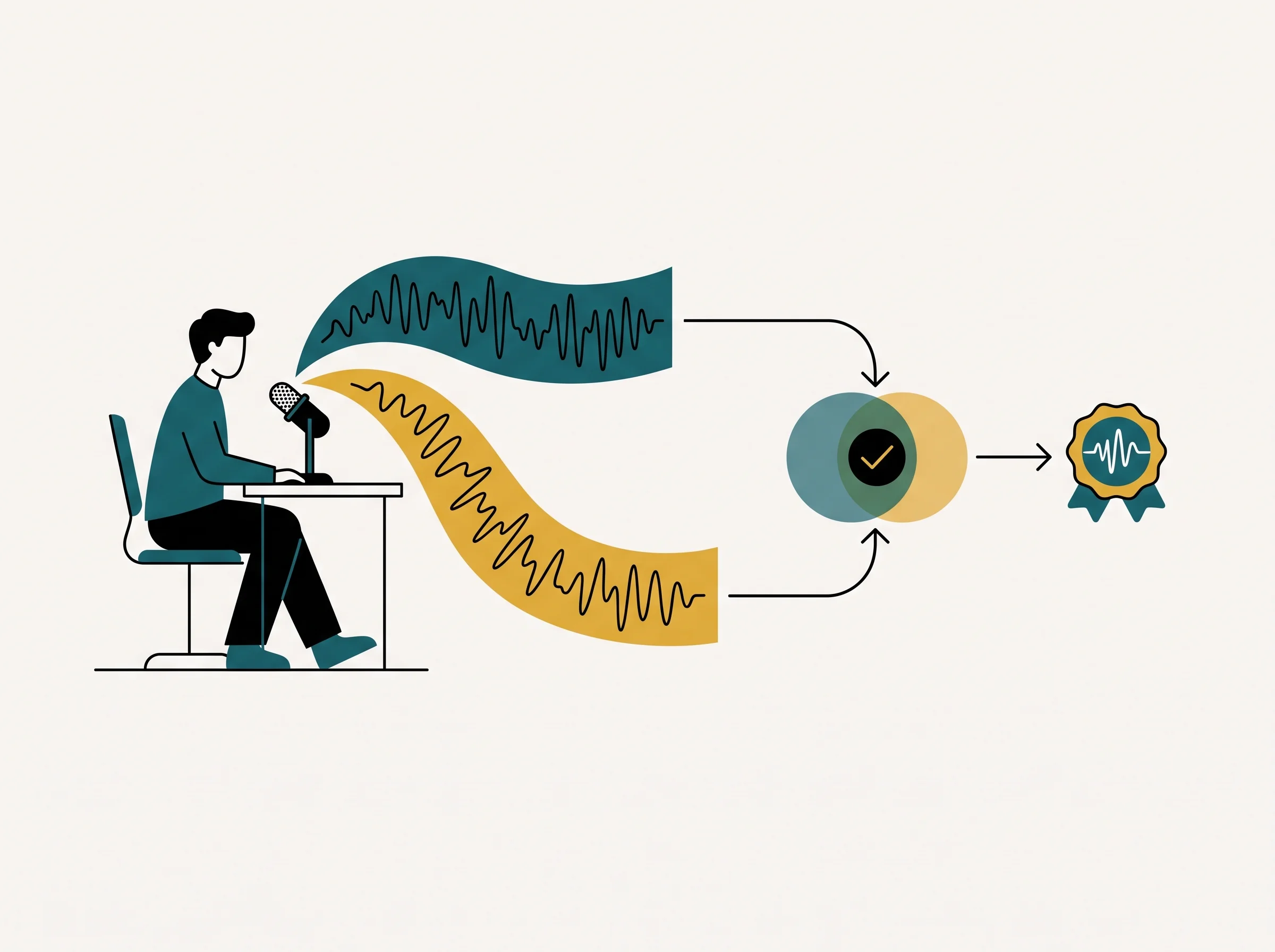
With Gemini, one recording isn’t enough to clone a voice. The Gemini API voice cloning docs require both reference audio and consent audio.
- Reference audio: 10–30 seconds of clean, natural speech. The announcement described it as a 30-second sample.
- Consent audio: a recording of the same person reading a set consent sentence. Sentences are provided for 30 locales, including Korean (ko-KR).
- Speaker verification: the system creates the voice only after confirming that both recordings are the same person.
- Recording setup: to help pass verification, Google recommends making both recordings with the same microphone in the same environment.
For example, if you record in Korean, you read the sentence below. Roughly translated, it says: “I am the owner of this voice and I allow Google to use this voice to create a speech synthesis model.”
나는 이 음성의 소유자이며 구글이 이 음성을 사용하여 음성 합성 모델을 생성할 것을 허용합니다.
Gemini API voice cloning docs
Both Flash TTS and Flash-Lite TTS support cloning. It’s limited to your own voice or voices you have the right to use.
Free tier and paid pricing
On the Gemini API pricing page, 3.8 Flash TTS input and output are both listed as free of charge on the free tier. No separate charge for design or cloning is listed either, so going by the pricing page alone, you can start cloning on the free tier.
The catch is that content sent and received on the free tier is marked as used to improve Google products. The Gemini API terms say human reviewers may read inputs and outputs after they’re disconnected from your Google account and API key, and tell you not to submit sensitive or personal information to the free services. Since you’d be uploading recordings of your own voice, it’s worth knowing this before you start.
The same terms cover what matters for monetized videos. Google says it doesn’t claim ownership of the content you generate, and there doesn’t appear to be any clause that singles out free-tier output to bar commercial use. That said, the terms describe AI Studio and the Gemini API as developer services for work or business purposes, not for personal consumer use.
Public documentation doesn’t put a number on how much you can use the free tier. The rate limits page only says limits vary by usage tier and other factors and can be checked in AI Studio. That makes it hard to know in advance how many narrations you can produce on the free tier.
The paid tier costs $9 per million output audio tokens, which works out to about $0.00225 per 10 seconds. That price runs through December 31, 2026, and rises to $18 on January 1, 2027. The lighter Flash-Lite TTS goes from $6 to $12.
For a sense of real-world cost, look at developer Simon Willison’s notes. On launch day he released a Gemini 3.8 TTS playground and wrote that generating a 1-minute-18-second, two-speaker dialogue with Flash TTS took about 20 seconds and cost 2.74 cents. He appears to have used a paid API key, and he didn’t use the cloning feature.
Regional restrictions and watermarks
Cloning through AI Studio isn’t offered in Illinois, Texas, the European Economic Area (EEA), the UK, Switzerland or India. South Korea isn’t on that list.
Whether it works in consumer apps isn’t clear yet. In a September 26 analysis, Latenode said Flash TTS is going into Gemini Notebook and Flash-Lite TTS into Google Vids, but noted that Google’s announcement didn’t say whether cloning is available through those routes. Even counting the regular Gemini app, AI Studio and the Gemini API are the only places where public materials currently confirm cloning.
Google embeds a SynthID watermark in all speech generated by Gemini audio models. The Next Web reported that cloned voices also carry C2PA Content Credentials.
Is it OK to clone someone else’s voice with AI?
Both companies give the same answer: your own voice is fine, but someone else’s requires their consent or legal rights to it.
- ElevenLabs: you can clone your own voice freely, for any purpose, while another person’s voice requires explicit consent. Its Prohibited Use Policy (updated August 17) bans impersonating political candidates or elected officials, even with permission.
- Google: you can only clone your own voice or one you have the right to use, and the voice’s owner must record the consent sentence themselves.
The procedures do differ. Gemini requires the voice’s owner to read the consent sentence personally, so it’s built to make it hard to get through with audio clipped from someone else’s video. ElevenLabs, going by the IVC docs, has users confirm for themselves that they have consent, which puts more of the judgment and responsibility on the user.
The worries raised by 10-second cloning
As the required recordings got shorter, concerns grew. In a September 28 post on the OrcaRouter blog, Gideon Frost pointed out that getting consent, uploading a sample and producing the first synthesis can now all happen in one sitting on a single phone, and wrote:
The consent problem does not shrink with the sample. It grows, because the bar to produce a convincing clone has fallen to a clip anyone can record.
Gideon Frost, OrcaRouter blog (September 28, 2026)
His point: shorter samples don’t make the consent problem smaller. When a short clip anyone can record is enough for a convincing clone, the problem actually gets bigger.
Gemini’s safeguards have drawn questions too. The Latenode analysis mentioned above noted that no one has yet independently tested whether the SynthID watermark survives editing, or whether a synthesized consent recording could get past verification. It advised against leaving the protection of voice owners up to the safeguards.
Real harm is already happening. In a September 29 article, the Korea Economic Daily (Hankyung) reported that an Italian bank lost €95 million in February. The fraudsters impersonated a lawyer using an AI-cloned voice, and €36 million of the loss hasn’t been recovered.
According to the same article, India’s Capillary Technologies also lost about €3 million in July through voice cloning and forged signatures. In a Gartner survey, 41% of chief information security officers (CISOs) said they had experienced at least one voice-call deepfake attack in the past 12 months. None of these cases involve Eleven v4 or Gemini, though.
Picking an AI voice for video narration, by situation
| If you… | Consider | What to check |
|---|---|---|
| Need a narration voice without spending money | Voice design (Voice Design on the ElevenLabs free plan, Gemini AI Studio or the free API) | The ElevenLabs free plan is personal use only; Gemini free-tier content is used to improve products |
| Want to clone your own voice for free | Gemini 3.8 TTS cloning (no cloning charge on the free tier per the pricing page) | 10–30 seconds of reference audio and your own consent recording; you can’t be in a region where AI Studio cloning is restricted; free-tier limits aren’t published as numbers |
| Want a quick clone from a single recording | Eleven v4 Instant Voice Clone | Starter ($6/month) or higher; at least a minute of audio recommended for good results |
| Are using it in monetized videos | ElevenLabs Starter or higher (includes a commercial license) | Gemini’s terms don’t claim ownership of output and don’t appear to have a commercial-use clause specific to the free tier, but they define the service as a developer service for work or business purposes |
| Are using someone else’s voice | Only with that person’s consent | Gemini requires the owner to record the consent sentence themselves; ElevenLabs bans impersonating politicians even with permission |
It’s too early to judge Korean-language quality. TechCrunch reported that v4’s supported languages grew from 70 to 90, with notable improvements in Japanese, Brazilian Portuguese, Chinese and Cantonese, but didn’t single out Korean. Whichever tool you lean toward, it’s safest to listen to a short test sentence before you decide.
If you also plan to make your video’s background music with AI, check out Making AI Songs for Free: Can You Earn YouTube Revenue With Them? (in Korean), which covers whether songs you make for free can be used to earn YouTube revenue.