Using AI to analyze and convert an old game’s original code into a remake has already reached the point where it produces games that actually run. In a case shared on Hacker News on October 6, 2026, the creator said Claude Opus 5.5 decompiled SimCity 2000 and ported it function by function, producing a version running in the browser in about two hours.
Whether you can publish or distribute a game made that way is a different question. South Korea’s Copyright Act allows reverse engineering only to the extent needed for compatibility, so distributing a remake ported from the original code carries a high risk of going beyond that scope. Even if you strip out the original code and art and build it anew, the risk doesn’t fully disappear if the result is substantially similar to the original.

The short version
- In the SimCity 2000 case, the AI decompiled the original and ported it function by function, and a version running in the browser came out in about two hours (according to the creator).
- Article 101-4 of South Korea’s Copyright Act limits reverse engineering to the parts needed for compatibility and bars using it to make a program substantially similar to the original. Distributing a remake ported from the original code carries a high risk of falling outside that scope.
- Ports that are actually distributed leave out the original assets and require users to supply their own legitimate game files, but even that isn’t a guarantee of safety. Even if you build from scratch without the code, risk remains if the game’s structure closely resembles the original.
Classic game remakes: how AI ported SimCity 2000
In a ‘Show HN’ post, Hacker News user drdator presented a remake of SimCity 2000 as a low-poly (built simply, with few polygons) 3D browser game, made with Claude Opus 5.5. The result is called City 2026. The whole project, polish included, took ‘a few days,’ according to the creator.
It started with a single prompt.
create a typescript webgl low-poly version (full replica of game logic) of simcity 2000.
drdator, Hacker News Show HN (2026-10-06)
That’s a request to build a low-poly SimCity 2000 in TypeScript and WebGL while fully replicating the game logic. This ‘full replica’ goal ties directly into the copyright issues we’ll get to later.
Here’s the sequence the creator described.
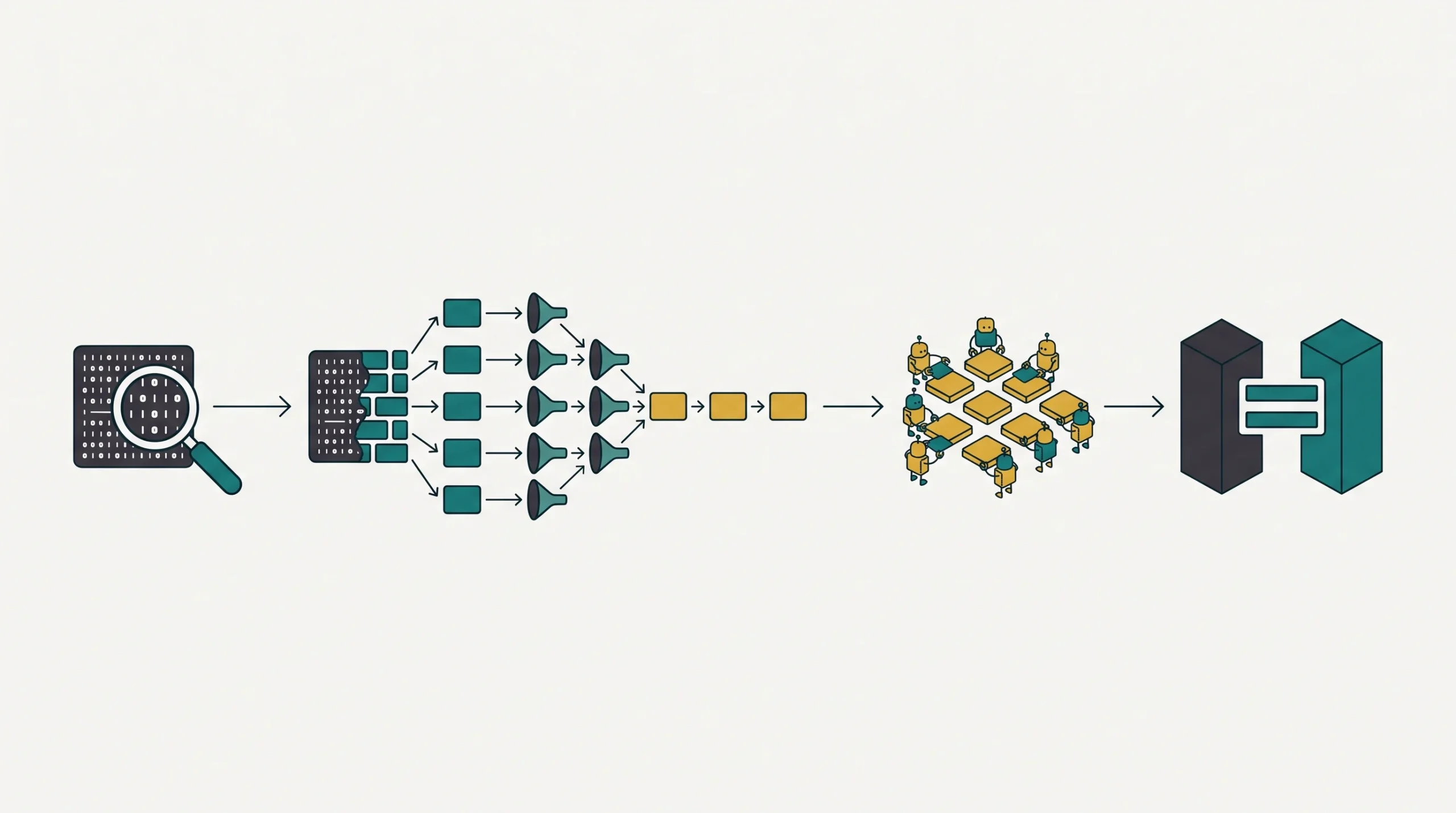
- The AI unpacked the original Mac version of SimCity 2000 with the decompiler Ghidra. Decompiling means turning an executable’s machine code back into code that people can read.
- It ported the native PowerPC code used on old Macs into TypeScript, one function at a time.
- By running 27 helper AIs (subagents) that split up the work, it had a version running in the browser in about two hours.
- Given a follow-up prompt, Opus decided on its own to use the PowerPC emulator Unicorn and built a Python verification tool that mimics Mac system calls. The creator says it ran 10,000 in-game days to check that the game state matched the original.
The creator says none of the original art or sound was used. Opus generated the 3D and vector assets in code, the bitmap images were made with GPT Image 2, and the music and sound effects are CC-licensed tracks by Kevin MacLeod. Touches like smog, depth of field, and ambient sound were added too, according to the post.
Everything so far comes from the creator’s own account. The post has no link to the source code and no published verification logs, so there’s no way yet to check any of it from the outside. The creator also didn’t answer a comment asking about the cost.
If you plan to try the game yourself, there’s one thing worth knowing. When a commenter said it made their phone run hot, the creator pointed to depth of field, which is on by default, and suggested turning it off under Options > Display.
AI decompilation: how far it has gone with other games
Others have used AI on old game code too. Here’s what each of them has shared, gathered in one table.
| Who (when shared) | Tools / plan | Time taken | Cost | Result |
|---|---|---|---|---|
| drdator, Hacker News (2026-10-06) | Claude Opus 5.5 (plan not disclosed), 27 subagents, Ghidra, Unicorn emulator, GPT Image 2 for images | About 2 hours to first working build, a few days overall | Not disclosed | Low-poly 3D SimCity 2000 clone City 2026. Reported matching the original’s state in a 10,000-day simulation |
| egeozcan, Hacker News comment (date not disclosed) | Claude Opus 5.5 (plan not disclosed) | Not disclosed | Not disclosed | Red Alert 2 launcher. Menu skipping, bug fixes, unit and balance changes; rendering separated from game logic to run 32 matches in parallel on a 3950X. Kept private over copyright concerns |
| Macabeus, personal blog (2026-08-17) | Claude Code (model version not disclosed) | A year of study and tool-building before starting | Not disclosed | 51% of code bytes decompiled for the GBA game Klonoa: Empire of Dreams (2001) (author’s post) |
| flyngmt, SteamDeckHQ report (2026-03-17) | AI coding tools including Claude (used only for the PC port), built on the existing ac-decomp decompilation | Not disclosed | Not disclosed | Native PC version of GameCube Animal Crossing (in playtesting at the time of the report). Requires a legitimate US disc image to run |
The results look so different because the jobs are different. City 2026 is a remake that ports the original to run in a new environment. Klonoa is a decompilation that recreates code identical to the original, and the Animal Crossing project ported decompiled code that people had already recreated over to PC.
The Klonoa case shows that AI decompilation still isn’t a one-click job. Macabeus wrote that a year of study and tool-building was needed before starting, and that the 663 functions were each large, which made the work hard. At one point Claude Code tried to ‘cheat’ by proposing an unnecessary fork of the compiler, but it also found an Easter egg that had stayed hidden for 25 years.
There are also signs that releasing the result is a bigger wall than the technology. egeozcan, who built the modified Red Alert 2, wrote that it hadn’t been released anywhere because of copyright concerns.
The community is split as well. After word got out that Claude Code was used for the Animal Crossing PC port, there were reports of reactions like ‘AI-Coded Slop, No Thanks.’ The decompilation list site Read Only Memo flags projects that used AI with a separate marker (as of its October 3, 2026 update).
Korean copyright law allows program reverse engineering only for compatibility
South Korea’s Copyright Act calls unpacking someone else’s program code ‘reverse engineering of program code.’ Article 2, item 34 defines it as reproducing or converting code to obtain the information needed for compatibility. In other words, the purpose is tied to compatibility right in the definition.
Article 101-4 separately sets out when you may reverse engineer without permission and what you must not do with the information you obtain. Here’s a summary of the current provision (the version in force since August 8, 2023).
| Item | What the provision says |
|---|---|
| Who | A person lawfully entitled to use the program, or someone authorized by that person |
| When | When the information needed for compatibility isn’t readily available and obtaining it is unavoidable |
| How far | Only the parts of the program needed for compatibility (paragraph 1) |
| Prohibited ① | Using information obtained through reverse engineering for purposes other than compatibility, or providing it to third parties (paragraph 2) |
| Prohibited ② | Using it to develop, produce, or sell a program substantially similar in expression to the original, or otherwise to infringe copyright (paragraph 2) |
The Ministry of Government Legislation’s plain-language legal information service (as of September 15, 2026) lists the same prohibitions. Article 5 adds another layer: a creative work made by translating, adapting, or otherwise transforming an original work is a derivative work, and protecting it doesn’t reduce the original author’s rights.
Whether code decompiled from machine code and rewritten in another programming language counts as ‘translation or adaptation’ here may be judged differently from case to case. Still, there’s room to see it as a derivative work that reworks the original code.
How the SimCity 2000 approach measures up against the law
City 2026’s approach is hard to fit within what the provision allows. The goal wasn’t compatibility with another program but a ‘full replica of the game logic,’ and the original functions were ported one by one, then checked to produce the same state over 10,000 days.
If the resulting code is substantially similar in expression to the original, there’s a high risk it falls under the uses that paragraph 2 prohibits. Swapping in newly made art and sound doesn’t remove the risk on the code side.
This is an interpretation based on the text of the law, not a court ruling. Other countries, including the US, apply different standards.
As of October 9, 2026, there were no reports of the rights holder raising an issue with City 2026. Even so, if you’re thinking of releasing a game made the same way in Korea, the text of the law alone is a clear warning sign.
Clean room reverse engineering: does separating the reading AI from the writing AI help?
This exact point came up in the Hacker News comments. User qarl wrote that, strictly speaking, having agents read the old code directly and write the new code breaks the rules of reverse engineering:
You need a gap between the agents that look at the old code and the agents that implement the new code. With an English spec connecting them.
qarl, Hacker News comment
In other words, there should be a gap between the agents that examine the original and the agents that do the implementing, connected only by an English spec. By qarl’s own account, the comment got downvoted, and the creator didn’t respond to the point.
A so-called ‘clean room’ works like this: the side that analyzed the original hands over only a functional spec, and a side that has never seen the original builds something new from that spec alone. South Korea’s Copyright Act doesn’t list this procedure as a condition for escaping liability. It’s closer to a practice for reducing risk.
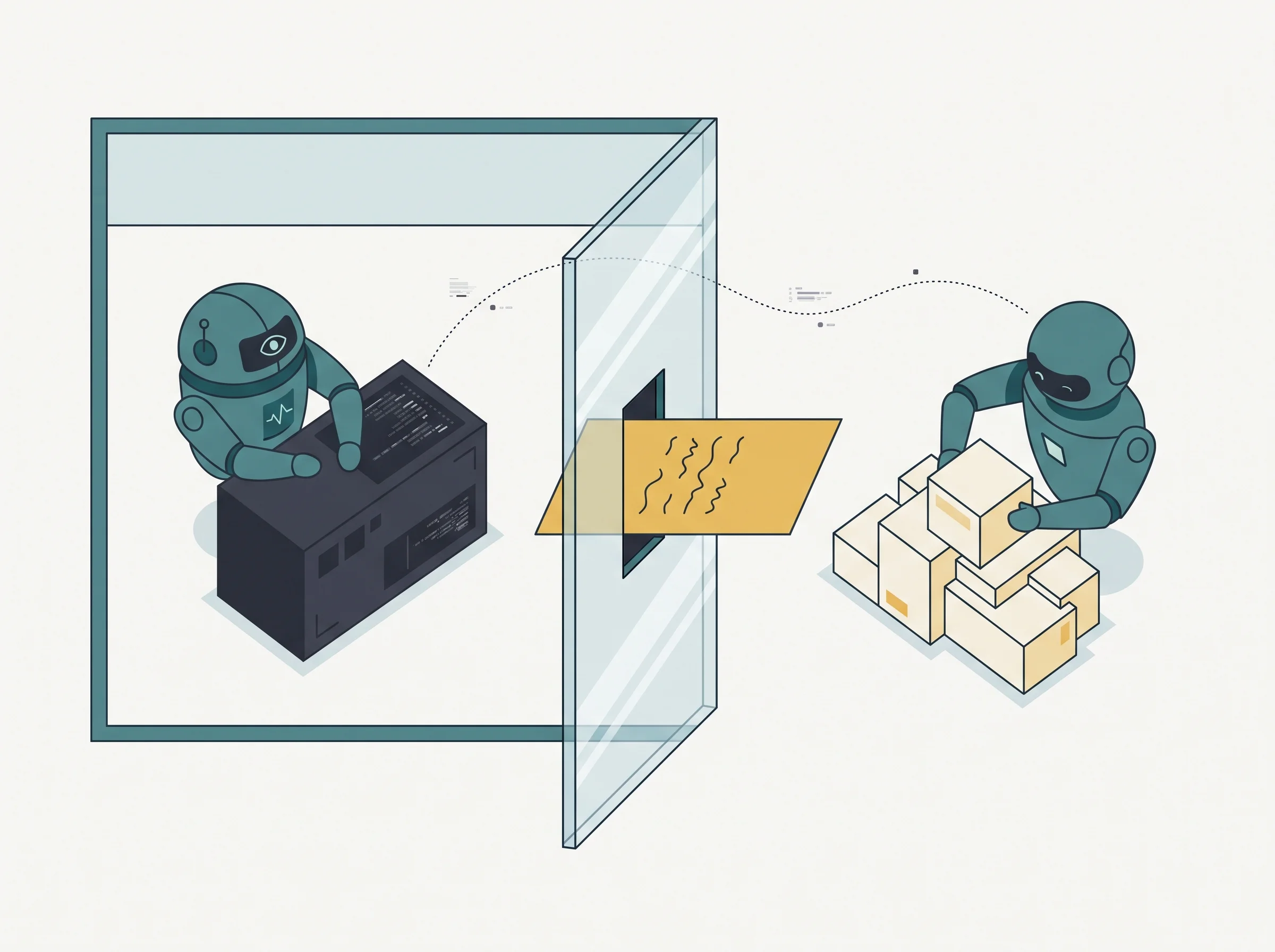
Whether imitating a clean room with AI holds up is still unsettled. In March 2026, Dan Blanchard, maintainer of the open-source library chardet, rewrote the library with Claude and changed its license from LGPL to MIT. The original author, Mark Pilgrim, objected that it wasn’t a clean room because it was written while exposed to the original code.
Similarity measured with the code-similarity tool JPlag came out at 1.29%. Simon Willison, who summarized the dispute, leaned toward the view that the rewrite was legitimate while noting that both sides made credible arguments.
Plagiarism Today (March 24, 2026), writing about ‘Malus,’ a service that splits the AI writing the spec from the AI doing the implementation, pointed to a different weakness: it’s hard to rule out that the implementing AI already saw the original code during training. It also argued that because AI-generated code isn’t eligible for copyright in the US, a promise that you ‘own’ the result is hard to back up.
No court has ruled on the chardet rewrite either. In a post dated April 13, 2026, US law firm Bean, Kinney & Korman noted that no US court has yet decided whether an AI-assisted reimplementation counts as a legitimate clean room process.
The firm also noted that no court has yet decided whether the output of feeding original code to an AI and having it rewritten in another programming language is an independent creation or a derivative work. Separating the reading AI from the writing AI may be a way to try to reduce risk, but on its own it isn’t grounds for calling the result safe.
How real classic game port projects handle distribution
A well-known dispute over reverse-engineered remakes is the re3/reVC case, in which GTA III and Vice City were reverse engineered. Take-Two sent takedown requests under US copyright law (the DMCA), then filed a copyright infringement lawsuit in September 2021.
The lawsuit ended on April 3, 2023, when Take-Two dismissed its claims against the four named defendants with prejudice, with each side bearing its own legal costs. Because no judgment was issued, it left no precedent on whether reverse-engineered remakes are legal. It was a US case, and the settlement terms weren’t made public.
Decompilation-based ports distributed publicly today mostly take the same approach: they don’t include the original art, sound, or data, and instead have users supply their own legitimate game files. Read Only Memo likewise explains that decompilation ports require users to provide their own ROM or original game files.
- Animal Crossing PC port: To run it, you have to put a legally dumped US disc image (ISO) in the rom folder. According to the report, AI tools like Claude were used only for the PC port work, not for the original decompilation.
- OpenSC2K: A human-made open-source remake of SimCity 2000. Its repository notes state that it contains no original source code or assets, and it has users point to SIMCITY.EXE from their own copy of SimCity 2000 Special Edition (for Windows 95, 1996). It also states that the MIT license doesn’t grant any rights to the original game or its assets.
- Klonoa decompilation: Sticks to a rule of not uploading assets or assembly code from the ROM to its Git repository.
This approach isn’t a guarantee of legal safety. It’s simply an industry practice of not distributing the original alongside the project, and if the code in the repository is ported from the original, the code-side problem described earlier remains.
City 2026 points in the same direction as this practice, since it used newly made art and CC music instead of the original assets. But the creator hasn’t said whether it loads original data at runtime, and describes the code itself as a function-by-function port of the original.
The surest route is when the rights holder opens up the code itself. EA released the source of the original SimCity under GPLv3 in January 2008 but kept the ‘SimCity’ trademark, so the general release goes by the name Micropolis. SimCity 2000 wasn’t part of that release.
Game copyright risks that remain even if you rebuild without the code
So is everything fine if you build from scratch without using any of the original code or art? In Korea, that’s hard to say outright.
In 2019, in the case between King.com’s ‘Farm Heroes Saga’ and Avocado Entertainment’s ‘Forest Mania,’ South Korea’s Supreme Court overturned the lower court ruling that King.com had lost. It held that a game can be protected by copyright when elements such as rules and scenarios are selected, arranged, and organically combined in a way that has creative individuality.
According to coverage at the time, the game industry had until then treated rules themselves as ideas and regarded imitation as standard practice. Since that decision, even a remake that doesn’t copy a single line of code could run into trouble if it reproduces the original’s rules and structure almost exactly.
Remaking old games with AI: risks compared by approach
Here are the provisions and cases covered so far, grouped by approach. Apart from cases where the rights holder gives permission directly, none of the approaches in the table guarantees safety.
| Approach | Known examples | Risk based on the law and cases |
|---|---|---|
| Decompiling the original and distributing code ported function by function | City 2026 (source not released), re3/reVC | Reverse engineering beyond compatibility; if the result is substantially similar to the original, there’s a high risk it falls under the uses prohibited by Article 101-4, paragraph 2. re3 ended up in court |
| Leaving out original assets and having users supply their own legitimate files | Animal Crossing PC port, OpenSC2K | Common practice among public projects. The original isn’t distributed with it, but there’s no legal guarantee, and if the code is ported from the original, the code-side risk remains |
| Separating the AI that sees the original from the AI that implements, connected by a spec | chardet rewrite (not a game), Malus service | No court ruling on the chardet rewrite. According to an April 2026 analysis by a US law firm, no US court has decided whether AI reimplementation counts as a clean room either. The chance that the implementing AI saw the original during training has also been raised as a problem |
| Building from scratch without code or art, but with rules and structure nearly identical to the original | 2019 Supreme Court Farm Heroes Saga case (not a remake case) | If the creative combination of elements is substantially similar, it can be protected |
| Using code released by the rights holder under its license | Micropolis (original SimCity, GPLv3) | Possible within the license terms. But EA kept the ‘SimCity’ trademark, so the name had to change |
AI has gotten as far as porting old games and getting them to run, but there’s still no basis for saying you can publish a result ported from the original code. If you’re thinking about distribution, avoid porting the original code and steer clear of copying the original’s structure as-is. Whether a particular game infringes ultimately depends on the case, so if you’re getting close to an actual release, it’s safer to get a professional opinion.
If you’d rather make a new game with AI than port an old one, take a look at our post on the steps for releasing an AI-made game on Google Play.